

Decoding Veterinary Job Offers: What Every Vet Should Know
Starting a career in veterinary medicine—or even making a move to a new practice—can feel like stepping into a whole new world. The terminology alone can be daunting: contracts, NDAs, non-competes, production pay, equity opportunities—the list goes on. Understanding these terms isn’t just about legal literacy; it’s about making informed choices that shape your career, your financial future, and your day-to-day work life.
Non-compete agreement
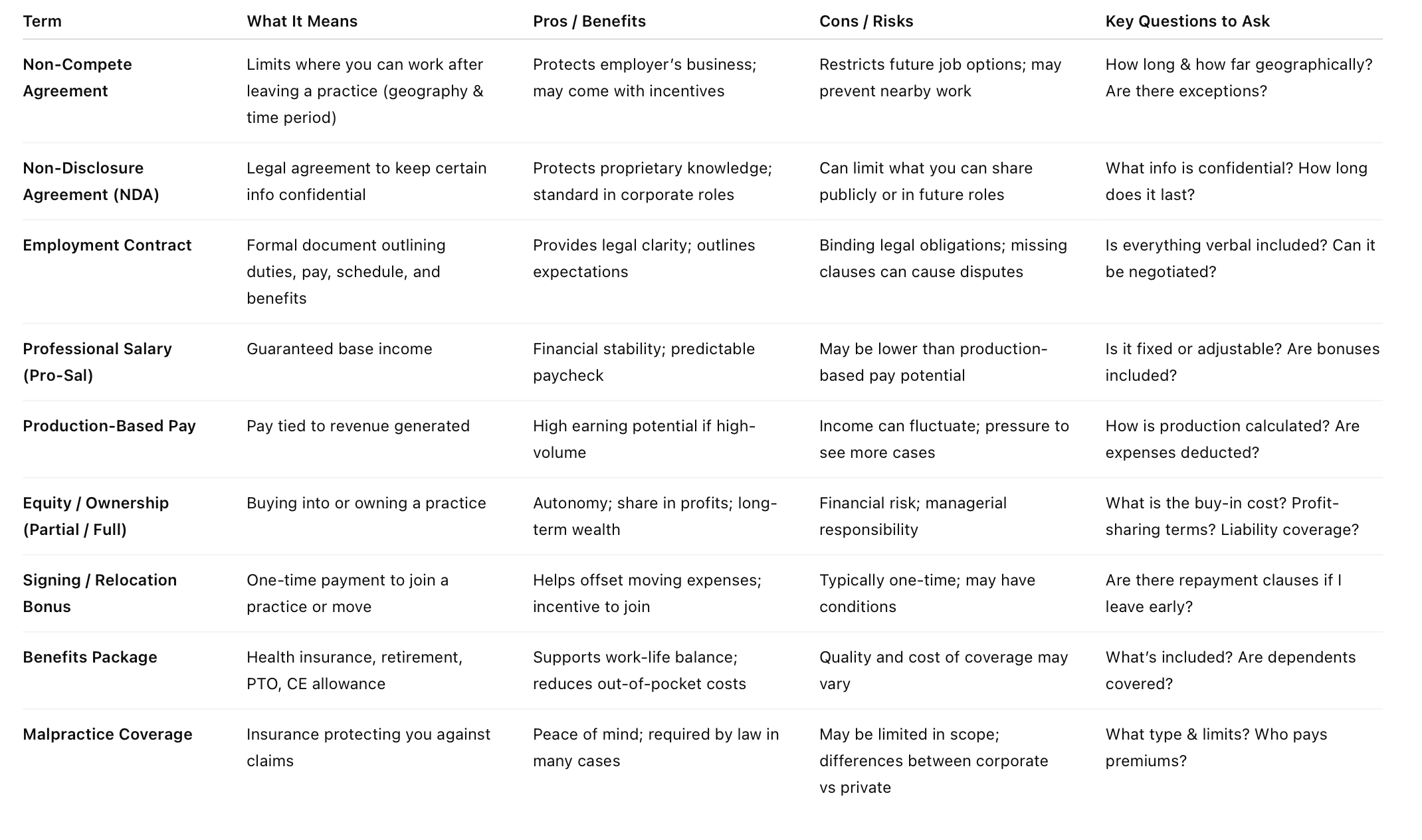
One of the first things many veterinarians encounter is the non-compete agreement. This clause can dictate where you are allowed to work if you leave a practice, often specifying both a geographic radius and a time period during which you cannot join a competing clinic. For some, it’s a minor restriction, but for others, especially those hoping to start their own practice nearby or join a local competitor, it can be a significant limitation. Reviewing non-competes carefully—and consulting a lawyer when necessary—is crucial.
Non-disclosure agreement
Equally common is the non-disclosure agreement, or NDA. NDAs protect confidential information, which can range from client lists to proprietary treatment protocols to internal business strategies. While these agreements are standard in corporate veterinary roles or positions with specialized procedures, they are legally binding and violations can carry serious consequences. Understanding what you can and cannot share is a key step in protecting both yourself and your employer.
Employment contract
Of course, all of these terms typically appear within the employment contract, the document that officially outlines your responsibilities, schedule, compensation, benefits, and legal obligations. While it may be tempting to skim, this contract is your career’s foundation. It specifies your salary or production-based pay, your work hours, on-call responsibilities, and often your eligibility for bonuses, equity, or ownership opportunities. Verbal agreements, while sometimes well-intentioned, are rarely enforceable—having everything in writing is essential.
Compensation
Compensation in veterinary medicine often comes in two primary forms: professional salary (pro-sal) and production-based pay. Pro-sal offers a guaranteed base income, giving vets financial stability and predictability regardless of how many patients they see. Production pay, on the other hand, ties income directly to revenue generated. This structure can be highly rewarding for high-volume or highly efficient veterinarians but can also introduce fluctuations, particularly during slow months or unexpected absences. Understanding exactly how production is calculated—whether it’s based on gross revenue or net after expenses—is essential for making accurate financial projections.
Ownership
Beyond salary, some practices provide opportunities for equity or ownership. A part-owner might gradually buy into the practice, gaining equity and a share of profits over time, while full ownership confers complete control and full financial responsibility. Ownership can provide substantial long-term rewards but also comes with risks: financial investment, managerial duties, and liability. For many veterinarians, deciding between being an employee and pursuing ownership is a pivotal career decision, balancing income potential, autonomy, and personal risk.
Bonuses
Other terms commonly encountered in contracts include signing or relocation bonuses, which can help offset moving expenses or incentivize joining a practice. Benefits packages often cover health insurance, retirement contributions, paid time off, and continuing education allowances. Malpractice coverage is another critical consideration, particularly if you’re moving between corporate and private practice settings, as coverage requirements and protections may differ.
Common Terms for Veterinary Careers
Navigating veterinary job offers can be overwhelming, but taking the time to understand the language and implications of each term will save you headaches and protect your career. Every clause—from non-competes to production pay—affects your professional trajectory, work-life balance, and financial security. Reading carefully, asking questions, and seeking advice from mentors or legal professionals is not a luxury; it’s a necessity.
Ultimately, understanding these terms empowers veterinarians to negotiate smarter, make informed choices, and align their employment decisions with both their immediate needs and long-term career goals. Knowledge is power, and in this case, it can make the difference between a job that drains you and a career that fulfills you.
