Interview Like a Champion: A Veterinarian’s Guide to Landing Your Dream Role
Securing your ideal veterinary position, whether in small animal practice, shelter medicine, emergency care, or corporate veterinary leadership, is about far more than just having the right credentials. It’s about presenting yourself as a professional, a collaborator, and a problem-solver while demonstrating that your values and priorities align with the practice or organization you hope to join. The interview is your stage to convey all of this, and the way you prepare can make the difference between a “good enough” impression and one that seals the deal.
Preparation begins long before you step into the clinic or log into a virtual meeting. Researching the practice thoroughly is critical: understanding their mission, the type of cases they handle, the culture of the team, and any recent developments or initiatives gives you a foundation to speak intelligently and genuinely about why you’re a good fit. The more familiar you are with the practice, the more tailored your answers will feel, and the more authentic your curiosity will come across.
Equally important is practicing your responses to common interview questions. Veterinarians are often asked to explain how they would handle clinical dilemmas, client conflicts, or challenging cases. While you can’t predict every scenario, reflecting on your past experiences and preparing concise examples will allow you to convey both competence and confidence. For instance, discussing a time you managed a critically ill patient with limited resources not only demonstrates your clinical knowledge but also your ability to stay calm under pressure. Mock interviews with mentors, colleagues, or peers can be a game-changer, helping you refine your communication and anticipate questions that may feel unexpected or tricky.
Interviews aren’t just about answering questions—they’re also about asking them. Thoughtful questions help you understand the practice’s workflow, team dynamics, and growth opportunities, while also signaling that you are serious about contributing to the practice’s long-term success. Asking about mentorship, professional development opportunities, or how decisions are made during emergencies provides insight into whether the environment will support your growth and aligns with your career aspirations. It also demonstrates that you are forward-thinking and proactive—qualities every practice values.
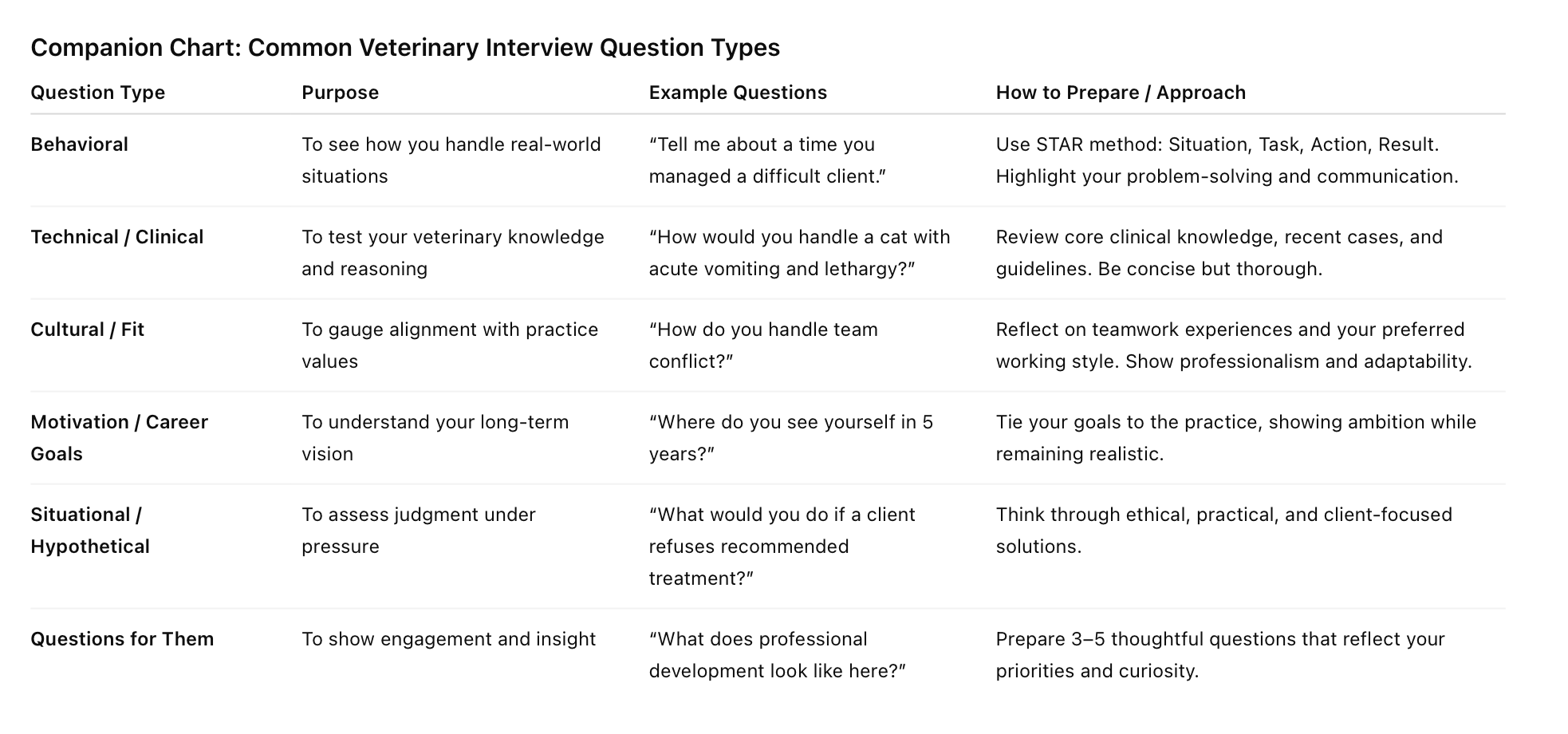
Understanding the different types of interview questions can help you prepare more effectively. Behavioral questions, such as recounting a situation where you handled a difficult client, allow the interviewer to assess your interpersonal skills, judgment, and professionalism. Clinical scenario questions, like determining the best approach for a patient with complex or acute symptoms, test your technical knowledge and decision-making under pressure. Cultural fit questions evaluate whether your personality and values align with the team, while some specialty or emergency practices may include practical tests or case discussions to assess hands-on skills. Preparing for each of these question types ensures that your answers are both structured and compelling.
Your presence during the interview is just as important as the content of your answers. Confidence, professionalism, and approachability all matter. Eye contact, a genuine smile, and clear communication convey that you are someone who can be trusted with patients, clients, and colleagues. Sharing your story—whether it’s about why you chose veterinary medicine, your experiences in shelter work, emergency care, or specialty practice—makes you memorable and demonstrates your passion for the field. By illustrating not just what you can do, but how and why you do it, you give interviewers a clear sense of your fit for the role.
Following up after the interview is the final step in leaving a strong impression. A brief, thoughtful thank-you note that references specific points from the conversation shows appreciation for the interviewer’s time, reinforces your interest in the position, and demonstrates professional courtesy. It’s a simple step that often differentiates a candidate who stands out from the rest.
In veterinary medicine, success in the interview room requires more than clinical skill. It requires preparation, reflection, strategic thinking, and the ability to communicate effectively under pressure. By researching the practice, anticipating questions, practicing your responses, asking insightful questions, and following up with professionalism, you can approach any interview with the confidence of a champion. The right preparation doesn’t just help you get the job; it helps you ensure that the role you accept will align with your goals, values, and career aspirations for years to come.