

The Brain Grocery List
14 foods that actually work, ranked by cost — plus the 5-minute breakfast recipe your brain has been waiting for
Your brain is the most metabolically expensive organ in your body. It accounts for roughly 2% of your body weight and consumes 20% of your total caloric intake. During periods of intensive learning — which is every day of vet school — those energy demands increase further. What you eat directly determines how well your brain can form new memories, sustain attention, regulate mood, and recover from the cognitive load of a full study day.
The problem is that most vet students are eating for convenience, not for performance. DoorDash. Dining hall food. Whatever is in the vending machine at 11pm. These are not bad people making bad choices — they are exhausted people in survival mode making the easiest available choice. The goal of this article is to make the brain-supportive choice as easy as the convenient one, by giving you a specific, affordable list and one recipe you can actually make before your 8am lecture.
Everything on this list is available at any standard grocery store. The full haul costs under $40 for a week’s worth of brain food. That is less than two nights of delivery and significantly better for your exam performance.
Your brain uses 20% of your total caloric intake. During intensive learning periods, those demands rise further. What you eat is not a lifestyle choice, it is a cognitive performance variable.
The List: 14 Foods, Ranked by Cost Per Serving
Ranked cheapest first, because budget is real and the best grocery list is one you can actually afford to buy every week.
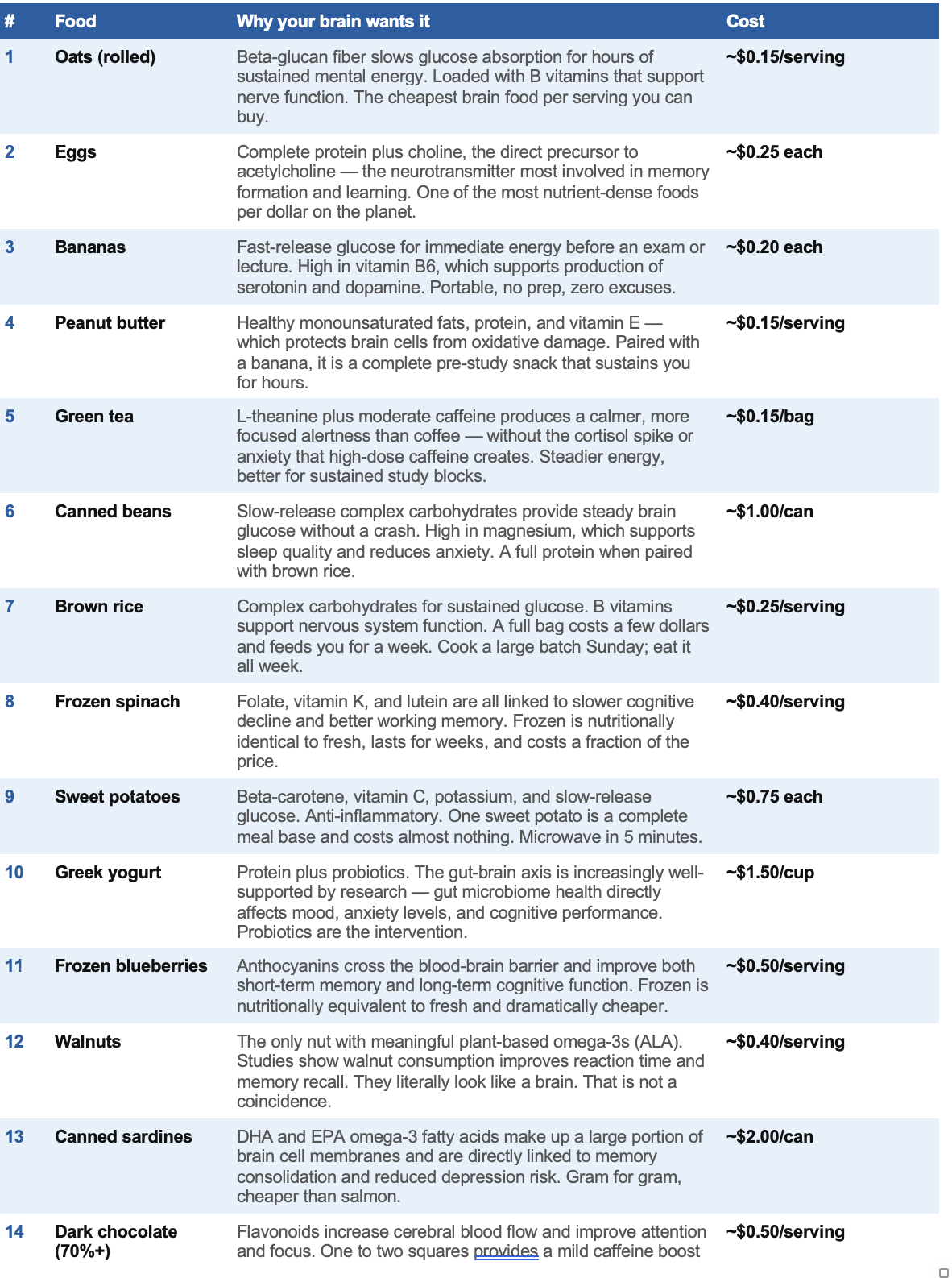
The full list — eggs, oats, bananas, peanut butter, green tea, canned beans, brown rice, frozen spinach, sweet potatoes, Greek yogurt, frozen blueberries, walnuts, sardines, dark chocolate — runs under $40 at most grocery stores. That is a full week of brain fuel.
What These Foods Actually Do: The Short Version
There are three mechanisms worth understanding because they change how you think about food timing, not just food choice.
Glucose timing
Your brain runs on glucose. The question is not whether to eat carbohydrates but which kind and when. Simple carbohydrates (white bread, sugary cereal, most packaged snacks) spike blood glucose quickly and drop it just as fast — producing the “brain fog” crash that makes post-lunch studying feel impossible. Complex carbohydrates from oats, beans, sweet potatoes, and brown rice release glucose steadily over two to three hours, maintaining the fuel supply your brain needs for a sustained study block. Eat complex carbs before you study. Save simple sugars for right before you need an immediate energy hit.
Omega-3 fatty acids
DHA, one of the omega-3 fatty acids found in sardines, walnuts, and other sources, makes up approximately 15% of the brain’s dry weight. When DHA levels are adequate, synaptic membranes are more fluid and flexible, which facilitates faster and more reliable transmission of signals between neurons. In practical terms: adequate omega-3 intake is associated with faster learning, better working memory, and reduced risk of depression — all of which matter enormously during year one of vet school.
The gut-brain axis
The connection between gut health and brain function has moved from fringe hypothesis to mainstream neuroscience over the past decade. The vagus nerve, aka, cranial nerve X, which you just learned about — is the primary communication highway between the gut and the brain. Gut bacteria produce neurotransmitters including serotonin, dopamine, and GABA. They modulate the stress response. They influence the inflammatory pathways that affect cognitive function. Fermented foods and probiotic-rich foods like Greek yogurt directly support this system. Highly processed foods disrupt it. This is not speculative — it is increasingly well-documented, and it means that what you eat for dinner tonight affects how you feel and think tomorrow morning. Cranial nerve X is the vagus nerve, and it is the primary communication highway between your gut and your brain. Your diet is a direct input to your nervous system. This is not wellness advice. This is anatomy.
The Foods That Are Actively Working Against You
This article is not about restriction. But there are a few things worth naming because they are extremely common in vet student diets and they directly impair the cognitive functions you need most.
Ultra-processed snacks and fast food: High in refined sugar, trans fats, and artificial additives, these foods produce rapid blood glucose spikes and crashes, trigger systemic inflammation, and disrupt the gut microbiome. The evidence that highly processed diets impair learning and memory is now strong enough that it belongs in this article. This does not mean never eat fast food. It means not eating it as your primary fuel source during a period of intensive learning.
Excessive caffeine: Caffeine blocks adenosine receptors and temporarily increases alertness — up to a point. Beyond approximately 300mg per day (two to three cups of coffee), caffeine begins to elevate cortisol, increase anxiety, and impair sleep quality. Sleep is when memory consolidation happens. Staying up later with caffeine and then sleeping fewer hours is one of the most counterproductive things you can do during exam preparation. The green tea recommendation on the grocery list is a deliberate suggestion to reduce total caffeine while maintaining alertness through L-theanine.
Skipping breakfast: Multiple studies have demonstrated that skipping breakfast measurably impairs attention, memory recall, and problem-solving performance in the hours that follow. The effect is dose-dependent, a minimal breakfast is better than nothing, but a proper one matters. The recipe below takes five minutes and costs less than $1.50. There is no viable excuse for skipping it.
THE SCRUB SQUAD BRAIN BOWL
The 5-Minute Brain-Fueled Breakfast
Ready in 5 minutes · Cost: under $1.50 · No excuses.
WHY THIS RECIPE WORKS
Oats: slow-release glucose for 2–3 hours of sustained mental energy. Blueberries: anthocyanins for memory and cognitive function. Walnuts: omega-3s and antioxidants. Banana: B6 for neurotransmitter production. Peanut butter: healthy fats and protein for satiety and stable energy. Together, this bowl covers glucose, omega-3s, antioxidants, protein, and fiber in one container in under five minutes.
INGREDIENTS
½ cup rolled oats (not instant)
1 cup water or milk (dairy or plant-based)
½ banana, sliced
¼ cup frozen blueberries (straight from the freezer is fine)
1 tablespoon peanut butter
Small handful of walnuts (about 5–7 halves)
Optional: a drizzle of honey or a square of dark chocolate grated on top
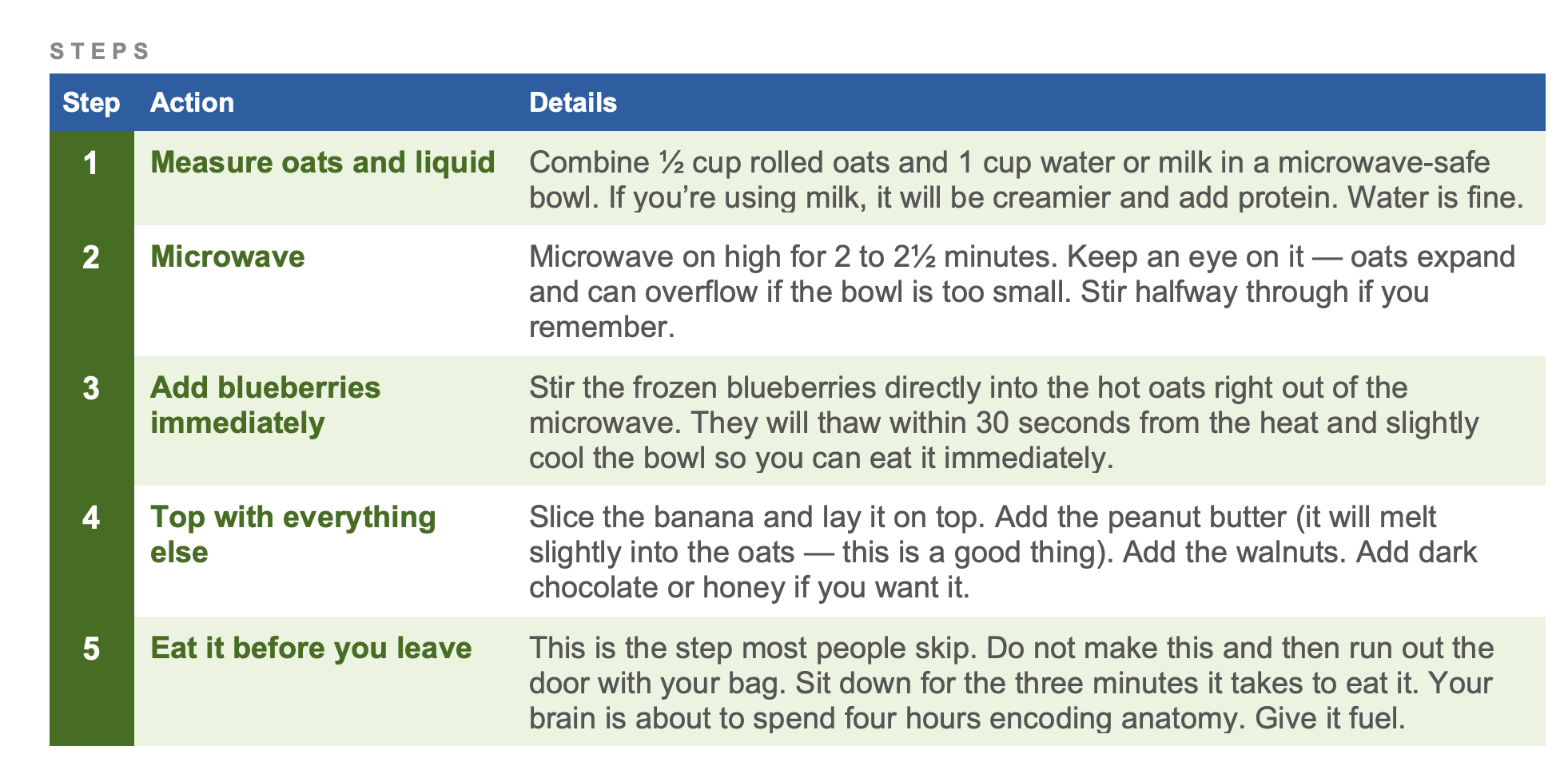
STEPS
VARIATIONS FOR EVERY SITUATION
No microwave: Make overnight oats the night before. Combine oats and milk in a jar, seal it, refrigerate. In the morning add the toppings cold. Takes 2 minutes the night before, zero minutes in the morning.
No time at all: Banana + peanut butter + a handful of walnuts. Eat it walking to class. Covers glucose, omega-3s, and healthy fats in about 20 seconds of prep time.
Need more protein: Add a scoop of Greek yogurt on top of the oats instead of or in addition to the peanut butter. Adds 15–20g of protein and probiotics in one move.
Completely broke: Oats + water + banana + peanut butter. Cost: under $0.60. Still covers glucose, potassium, B6, healthy fats, and fiber. The blueberries and walnuts are upgrades, not requirements.
The Weekly Brain Haul: What to Actually Buy
This is the complete shopping list for a week of brain-optimized eating on a student budget. Print it, screenshot it, or just take a photo of this page before your next grocery run.
THE SCRUB SQUAD WEEKLY BRAIN HAUL
Refrigerated: Eggs (1 dozen) · Greek yogurt (4-pack) · Peanut butter (1 jar lasts 2–3 weeks)
Frozen: Blueberries (1 bag) · Spinach (1 bag)
Pantry: Rolled oats (large container) · Brown rice · Canned beans (4 cans, mixed types) · Canned sardines (2–3 cans) · Walnuts (1 bag) · Dark chocolate 70%+ (1 bar) · Green tea bags
Total estimate: $35–42 depending on store and region. Feeds one person for a full week of brain-optimized eating. Cheaper than two nights of delivery. Better for your GPA than anything on a DoorDash menu.
The One Change That Makes Everything Else Easier
You do not have to overhaul your entire diet on Day 3 of vet school. That is not the point of this article. The point is to give you enough information to make one better choice, consistently, starting with the most important meal of the study day.
Eat breakfast. Make it the Brain Bowl when you have five minutes, make it banana-and-peanut-butter when you do not. Add blueberries to whatever you are already eating. Swap one coffee for a green tea in the afternoon. Buy a bag of walnuts and put it on your desk next to your anatomy notes.
Small consistent choices made across 99 days add up to a measurably different cognitive environment for your brain during the hardest year of your training. The students who come out of year one intact are not always the ones who studied the hardest. They are often the ones who took better care of the instrument they were studying with.
Your brain is the instrument. Feed it accordingly.
Scrub Squad · Day 3 of 99 · Body
This article is part of the Scrub Squad 99-day program from Vet Candy. Free for every first-year vet student. Earn your De-Scrub certificate on Day 99.
