

This Poultry Vet Spent 10 Years Writing the Backyard Chicken Book Nobody Had Written Yet
Dr. Maurice Pitesky has spent his career in the space between global food security and someone's backyard flock. His new book, Dr. Cluck's Backyard Chickens, is peer-reviewed, vet-approved, full of puns, and ten years in the making.
By Vet Candy Editorial | June 2026 | Feature · Poultry Medicine & Books
If you've spent more than ten minutes around Dr. Maurice Pitesky, you understand why it took him ten years to write this book. Not because he was slow about it. Because he kept making it better.
Pitesky is an Associate Professor in Cooperative Extension at the UC Davis School of Veterinary Medicine, where his work sits at the intersection of poultry health, food safety epidemiology, HPAI modeling, and the kind of outreach that gets people to actually change how they keep their flocks. He has been talking to backyard chicken keepers — at fairs, in classrooms, through extension programs, at 4-H events, for the better part of two decades. He knows exactly what they get wrong and why. He also knows exactly how to make them laugh while they learn.
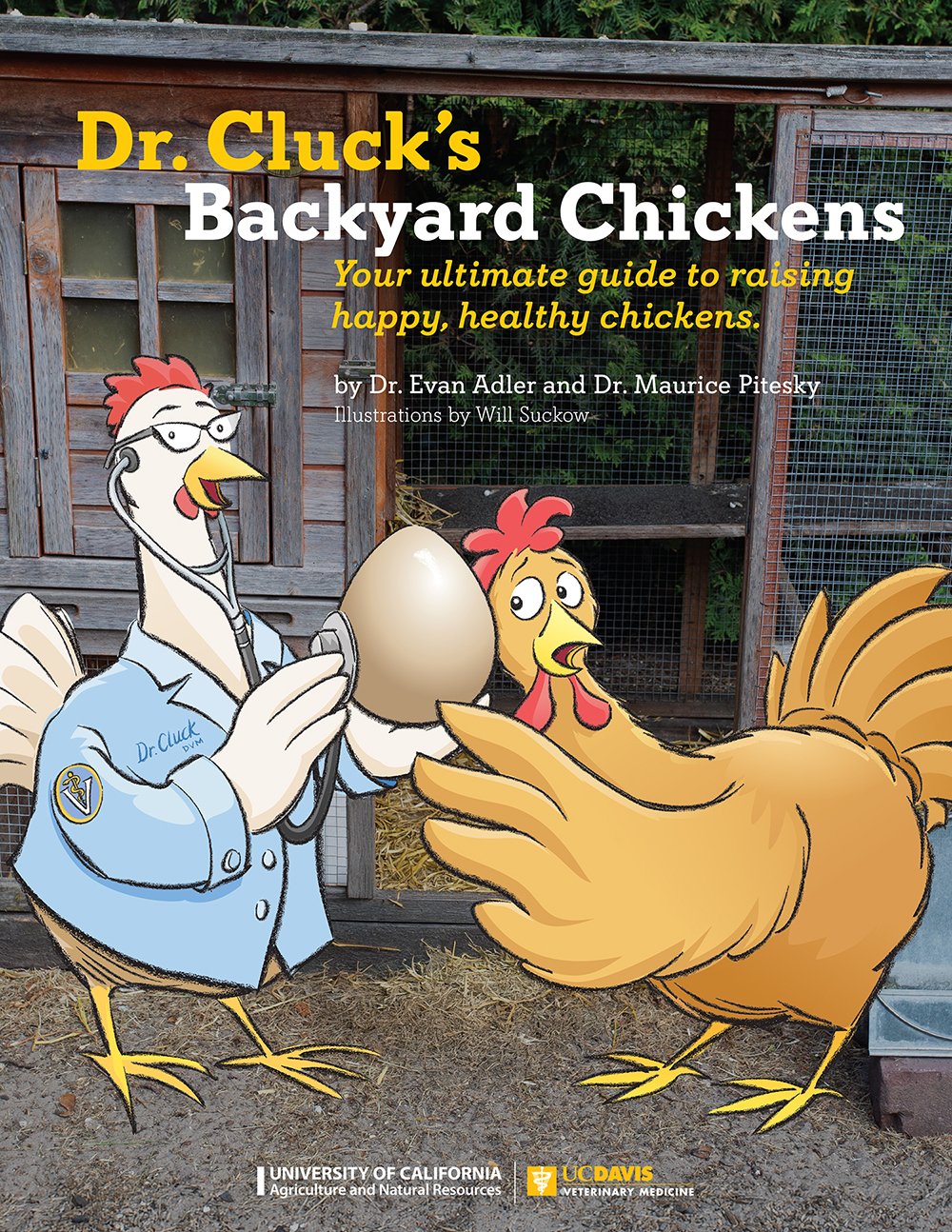
The result of all that is Dr. Cluck's Backyard Chickens, a 228-page, peer-reviewed, vet-approved guide to backyard poultry care co-authored with Dr. Evan Adler and illustrated by Will Suckow. Published by UC Agriculture and Natural Resources, it is, as Pitesky will cheerfully tell you, the world's first backyard chicken coffee table book.
We sat down with him to talk about what went into it, what he hopes it does, and why he chose a career where his patients are both someone's pets and the most consumed animal protein on the planet.
There Were Already Backyard Chicken Books. Why Write Another One?
Pitesky is quick to acknowledge the field isn't empty. There are good backyard poultry books. What he noticed was missing was a book that combined the two things he cares most about in his teaching: scientific rigor and genuine entertainment.
“While there are a lot of excellent backyard poultry books out there, we noticed that there was no book that was the 'go to book' based on the latest and greatest research that was also fun and entertaining at the same time.”
Dr. Cluck's Backyard Chickens is peer-reviewed by experts. It contains chapter-by-chapter references so readers can trace the science behind every recommendation. It has a full glossary and index. It covers biosecurity, nutrition, disease prevention and recognition, holistic remedy evaluation (what works, what doesn't), lifecycle management from chick to end-of-life decision, and practical food safety considerations — all of it grounded in current research.
It also has a cartoon chicken veterinarian as the narrator.
Dr. Cluck, illustrated by Will Suckow, wears glasses and a light blue lab coat and opens the book with a pledge: "I, Dr. Cluck, do hereby pledge allegiance to not use any fancy words in this book without explaining them — with liberty and chicken wings for all."
That is the tone of the book. And it is entirely intentional.
Ten Years Is a Long Time. What Took So Long?
The short answer is: Pitesky has been doing this work for a long time, and the book is a reflection of that depth, not a shortcut around it.
“I have always enjoyed giving presentations and demos to backyard poultry enthusiasts. I truly love working with students and grown-ups and have always gravitated toward integrating humor with science. This book and the characters and stories in the book reflect not only that knowledge but the authors' and illustrators' sense of humor and love of all things chicken.”
The longer answer is that writing something peer-reviewed, illustrated, practically useful, and genuinely fun is a harder editorial problem than it sounds. The book had to work for a 4-H kid, a first-time backyard keeper, a veterinary student, and someone who just thinks "sophisticated dad humor about backyard chickens" is a reasonable genre of book to own. Hitting all four audiences without losing any of them takes time.
The version that exists is the one Pitesky was satisfied with. That took a decade.
Why Poultry Medicine?
It's a question Pitesky has a genuinely interesting answer to, because his career sits in a place most people don't immediately think of when they think about poultry veterinarians.
“Chickens are interesting to me in that they are not only important for global food security — poultry is the most consumed animal protein on the planet — but they are also relatively common pets around the world. Hence the impact of working with poultry is both global and local. That drives me to think about the impact I can have whether it is working on global challenges — like HPAI or alternative feeds or disease modeling — or local problems — like someone's chicken is sick and they need some advice.”
That dual scale is unusual in veterinary medicine. Most practitioners work at one end or the other. Pitesky has built a career that genuinely operates at both simultaneously — which is perhaps why a book aimed at everyone from 4-H members to food safety epidemiologists felt like a natural extension of what he already does.
The HPAI piece is not incidental. With avian influenza continuing to pressure both commercial and backyard flocks, the biosecurity guidance in Dr. Cluck's Backyard Chickens has real public health relevance. The book's emphasis on practical flock protection — what it calls FLAWSS: Feed, Light, Air, Water, Space, and Sanitation — is grounded in exactly the kind of population-level thinking Pitesky applies to his epidemiological work.
Who Should Read It?
Pitesky's answer is broader than you might expect.
“The book was written and designed to be read by a wide audience including 4-H, backyard poultry enthusiasts, vet students, and even folks who don't have chickens but love 'sophisticated dad humor about backyard chickens.' The book can be read cover to cover or used as a reference. In my mind it is the world's first 'Backyard Chicken Coffee Table Book' in that you can open up the book and find a quick and useful tip, learn a random factoid, or just have a good chuckle.”
For veterinary students and practitioners specifically, the book functions as an accessible bridge to a client population that is large, growing, and often underserved clinically. The backyard chicken keeper who comes to your practice with a sick hen is not well-served by poultry medicine resources written for commercial production contexts. Dr. Cluck's Backyard Chickens is written for exactly that client — and understanding it helps the clinician understand the client.
It's also, Pitesky notes with obvious pleasure, a book that can be read "from beak to tail" or used selectively. That flexibility is built into the design — which is the coffee table book architecture doing its job.
The Practical Stuff
The book runs 228 pages, 8.5 by 11 inches, and is available in paperback ($29) and hardbound ($70) through UC ANR Publications. Co-author Dr. Evan Adler, trained at University College Dublin, has kept backyard chickens for over a decade — which grounds the book in the lived experience of the very reader it's written for.
The core daily health framework Pitesky recommends is built around FLAWSS — Feed, Light, Air, Water, Space, and Sanitation. The framework is intentionally simple enough to be remembered and applied, grounded in research, and directly applicable to the biosecurity challenges that matter most right now.
His one piece of advice before anyone brings home their first chick: do your homework first. Read. Find a veterinarian who sees chickens before you need one. Set up the coop before the birds arrive. And remember, as Pitesky notes with characteristic clarity, that backyard eggs cost more than store-bought ones. Go in knowing that.
The Bottom Line
Dr. Cluck's Backyard Chickens is what happens when a poultry epidemiologist who genuinely loves teaching decides to write the book he wished existed. It is peer-reviewed, practically organized, and illustrated by a cartoon chicken who pledges to explain every technical term. It is also, by design, the kind of book that sits on a coffee table and gets picked up again.
For veterinary professionals, it's worth knowing — both because your backyard chicken clients are going to start showing up with it, and because it's a useful reference for navigating a patient population that sits at the intersection of companion animal medicine and food animal public health in ways that are increasingly clinically relevant.
It took ten years. It was probably worth it.
About the Authors
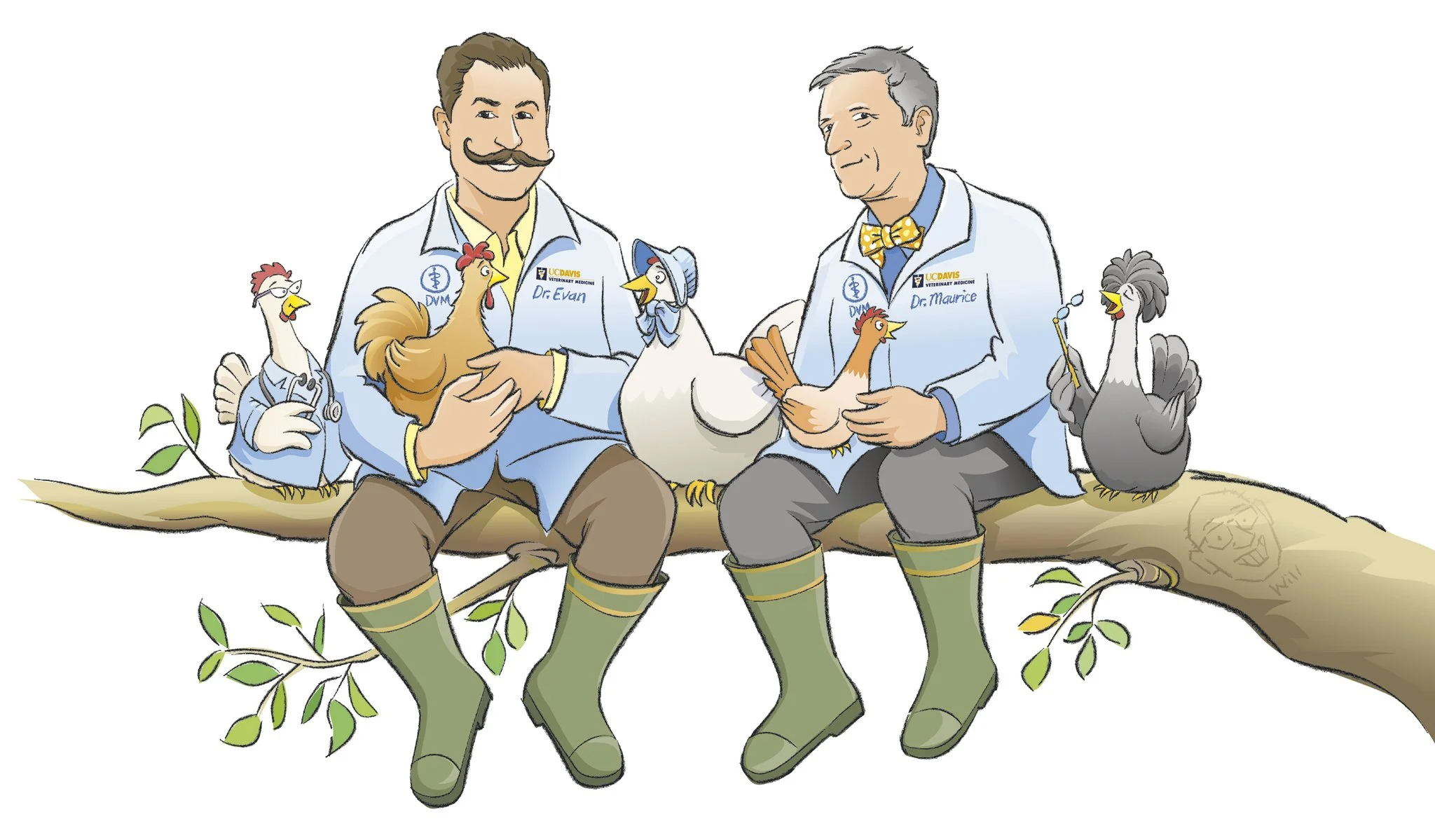
Maurice Pitesky, DVM, MPVM, DACVPM, is an Associate Professor in Cooperative Extension in Poultry Health and Food Safety Epidemiology at the UC Davis School of Veterinary Medicine. His research spans HPAI modeling, alternative feeds, disease epidemiology, and extension outreach to backyard and small-scale commercial poultry producers. Co-author Dr. Evan Adler, DVM, trained at University College Dublin and brings 15+ years of private practice experience with companion, farm, and exotic animals across both the United States and Ireland. Where Pitesky approaches flock health from the perspective of epidemiology and population-level risk, Adler grounds the book in the day-to-day clinical realities of individual animal care, creating a balance that gives the book its range.
Brain Check
Dr. Maurice Pitesky says his new book, Dr. Cluck's Backyard Chickens, is the world's first...
-
Incorrect
-
✅ Correct Answer: B
Explanation:
Believe it or not, it's a 228-page, peer-reviewed, vet-approved coffee table book on backyard chickens! Co-authored by Dr. Maurice Pitesky and Dr. Evan Adler, Dr. Cluck's Backyard Chickens combines science, practical flock care, and plenty of poultry puns to help backyard chicken owners raise healthier birds. It's educational, entertaining, and probably the only coffee table book where the stars occasionally lay eggs. -
Incorrect
-
Incorrect
Get the Book
Dr. Cluck's Backyard Chickens (UC ANR Publications, ISBN 978-1-62711-246-8)
Paperback $29 · Hardbound $70 | Order at: anrpublications.org
UC Davis news story: Don’t Wing It: Vets Pen ‘Dr. Cluck’ Book
Share This Article
Free Membership
Enjoyed this article?
There's a lot more where that came from.
Join 50,000+ veterinary professionals who get free RACE-approved CE, weekly clinical updates, and the most talked-about veterinary magazine in the profession — all completely free.
Join Vet Candy Free →No credit card. No catch. Just everything veterinary.