

Veterinary Interview Style Guide: Dress for the Job You Want
When it comes to interviews, many veterinarians focus on clinical skills, résumés, and references—but often overlook one of the most immediate factors in how they are perceived: their appearance. How you dress sends an unconscious message to your potential employer about your professionalism, attention to detail, and fit for the role. In the competitive world of veterinary medicine, from corporate offices to specialty practices, first impressions can make a lasting impact.
The Power of First Impressions
Research shows that people form judgments about competence and reliability within the first few seconds of meeting someone. Even in a field where your technical skills are critical, your interviewer will notice how you present yourself. A polished, professional appearance communicates that you respect the process, value the opportunity, and can represent the practice, hospital, or company well.
Dr. Ashley Hopkins, career coach at Vet Candy, emphasizes, “In veterinary medicine, your reputation travels fast. Dressing appropriately for an interview isn’t about vanity—it’s about signaling to your potential colleagues and leaders that you understand the culture and standards of the profession.”
Consider Who Is Interviewing You
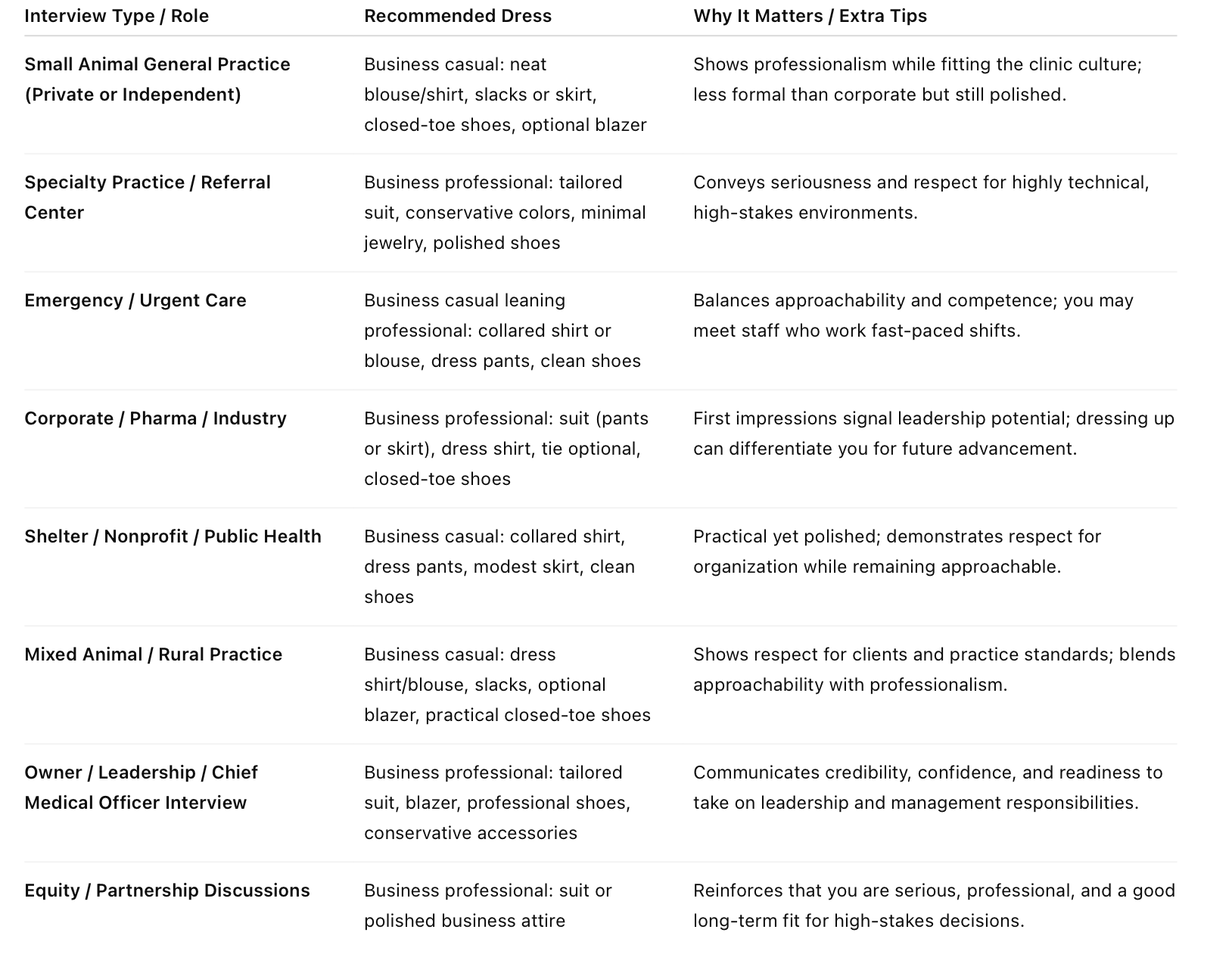
The type of role you are pursuing should influence how you dress. A corporate veterinary position, pharmaceutical company role, or practice with a formal culture requires more traditional professional attire—think tailored suits, blouses, or dress pants. On the other hand, interviews for shelter medicine, fieldwork, or mixed animal practices may allow for slightly more relaxed but still neat, clean, and professional clothing.
Dr. Hopkins advises, “It’s important to consider not just the organization but the person interviewing you. Are they in management, a fellow clinician, or HR? Dressing a step above what you think the daily attire is can help you command respect and show you are serious about the position.”
Dressing Up Always Wins
Even if a position is easy to fill or you feel confident about your skills, always err on the side of dressing up. First impressions not only help you land the job but can also influence your trajectory once you’re inside the organization. Dressing professionally communicates leadership potential and attention to detail—traits that can matter when future promotions or higher-responsibility roles are considered.
“A well-chosen outfit shows that you take the role seriously and that you are thinking about the impression you make on clients, colleagues, and supervisors,” Dr. Hopkins notes. “Even in casual settings, showing up slightly more polished can distinguish you from other candidates.”
Practical Tips for Veterinary Interviews
Professional over casual: Opt for clean, tailored clothing. Blazers, dress pants, conservative skirts, and closed-toe shoes are safe choices.
Neat grooming: Hair, nails, and minimal jewelry can make a big difference in perceived professionalism.
Avoid distracting elements: Loud colors, flashy accessories, or overly casual items like sneakers can divert attention from your skills.
Research the organization: If possible, look at staff photos, LinkedIn, or social media to gauge the expected dress code.
Confidence in comfort: Choose clothing that fits well and feels comfortable—you want your confidence to show, not your discomfort.
Conclusion
While your clinical knowledge, experience, and references are critical, how you present yourself in an interview sets the tone for how others perceive your professionalism. Dressing thoughtfully demonstrates respect, awareness, and ambition. As Dr. Hopkins puts it, “Think of your outfit as your silent advocate in the room. It can help open doors, reinforce your credibility, and set the stage for a successful career path.”
Pro Tips from Dr. Ashley Hopkins (Vet Candy):
“Even if the clinic is casual, showing up a step above their daily attire demonstrates respect and professionalism.”
“Pay attention to shoes and grooming—these details are noticed even if subconsciously.”
“When in doubt, overdress slightly. You can always remove a blazer or tie, but you can’t add polish after arriving.”