

Double HBCU Ivy, Classic Car, and a Sister Who Changed Everything
Lauren Petry is a soon-to-be Tuskegee graduate from Abbeville, Louisiana, who has built her career on grace, grit, and a very clear sense of what it means to belong to something larger than yourself.
Lauren Petry grew up moving. As an Air Force dependent, she experienced the kind of childhood that teaches you early how to adapt, how to find your footing in a new place, and how to carry home with you wherever you go. For Lauren, home has always been Louisiana, even when she was not there. The Cajun recipes. The family ties. The particular pride of someone who knows exactly where they come from.
She is 25 years old and about to become a double HBCU Ivy graduate, completing her veterinary degree at Tuskegee University. Her clinical interests span small animal medicine, exotics, surgery, and dentistry. She is the kind of student who shows up fully, in the classroom and in the kitchen, on the trail and in the exam room.
And she is the kind of person who, when she decided to take graduation photos, thought not about the obvious choices but about legacy. About what it means to stand inside a history and make yourself part of its continuum.
That instinct tells you a lot about who Lauren Petry is.
“I wanted my photos to reflect the same continuum, and to feel like I belonged within that timeline of progress and history.”
The 1929 Model A and the Weight of a Legacy
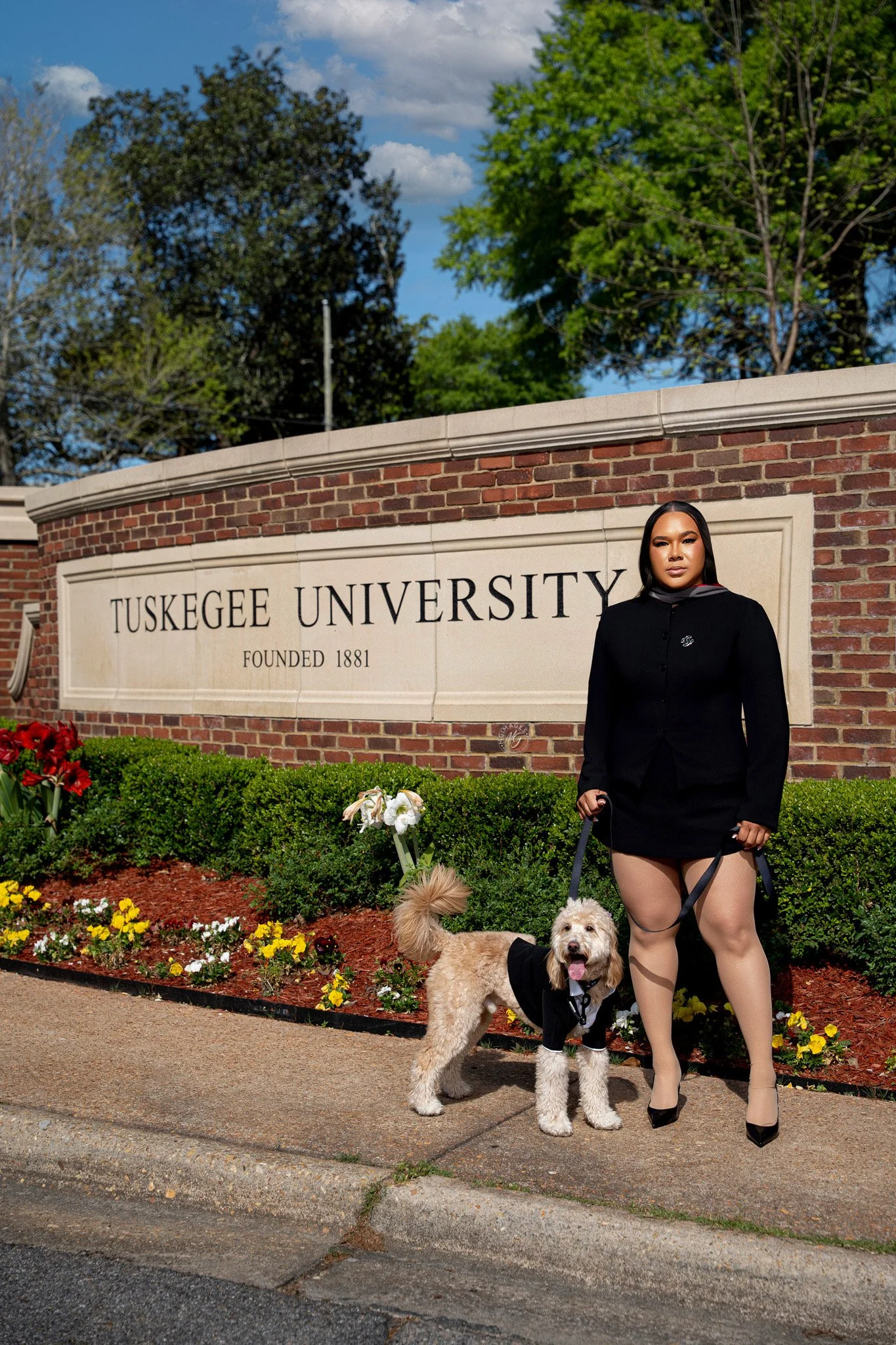
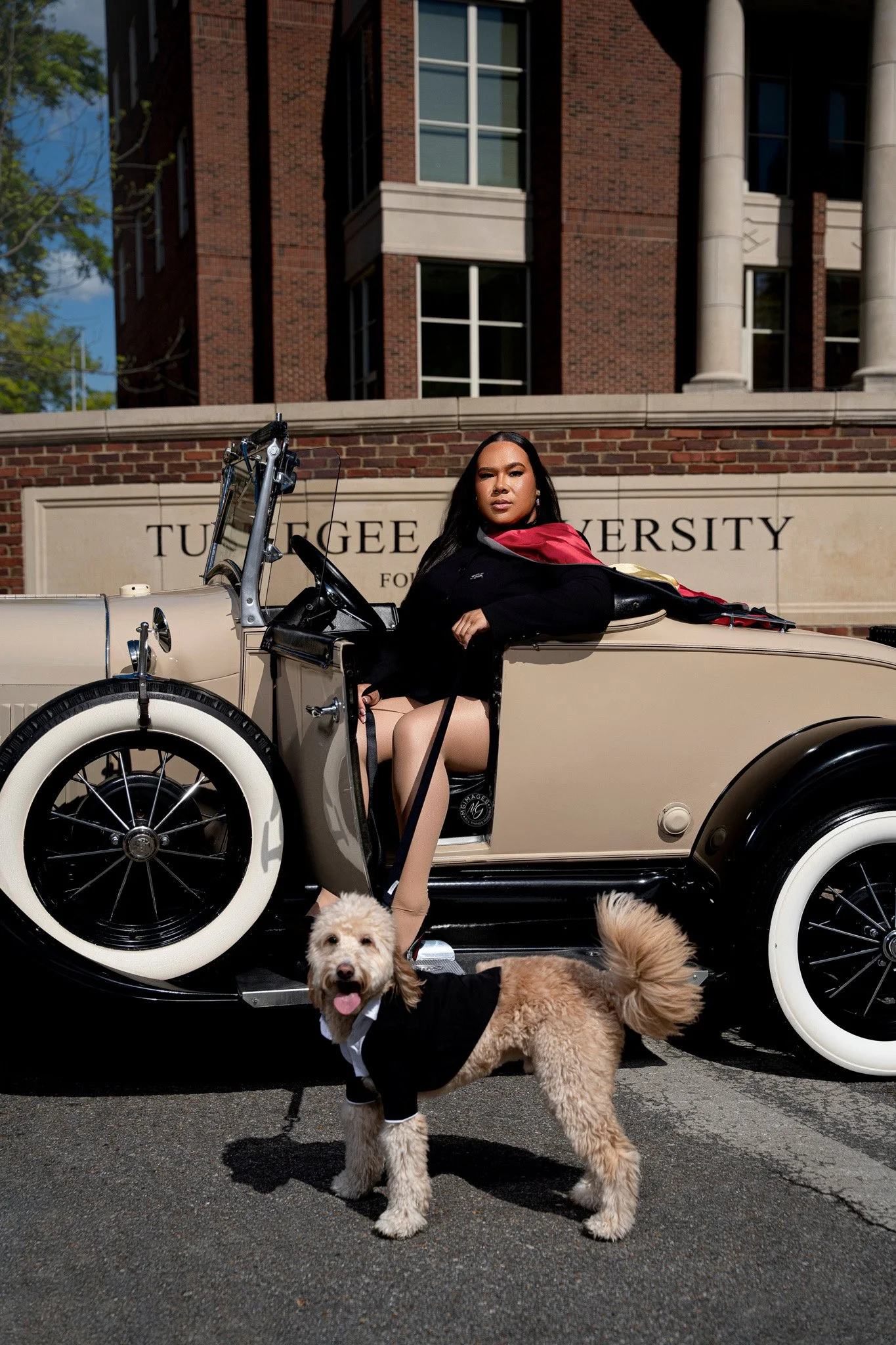
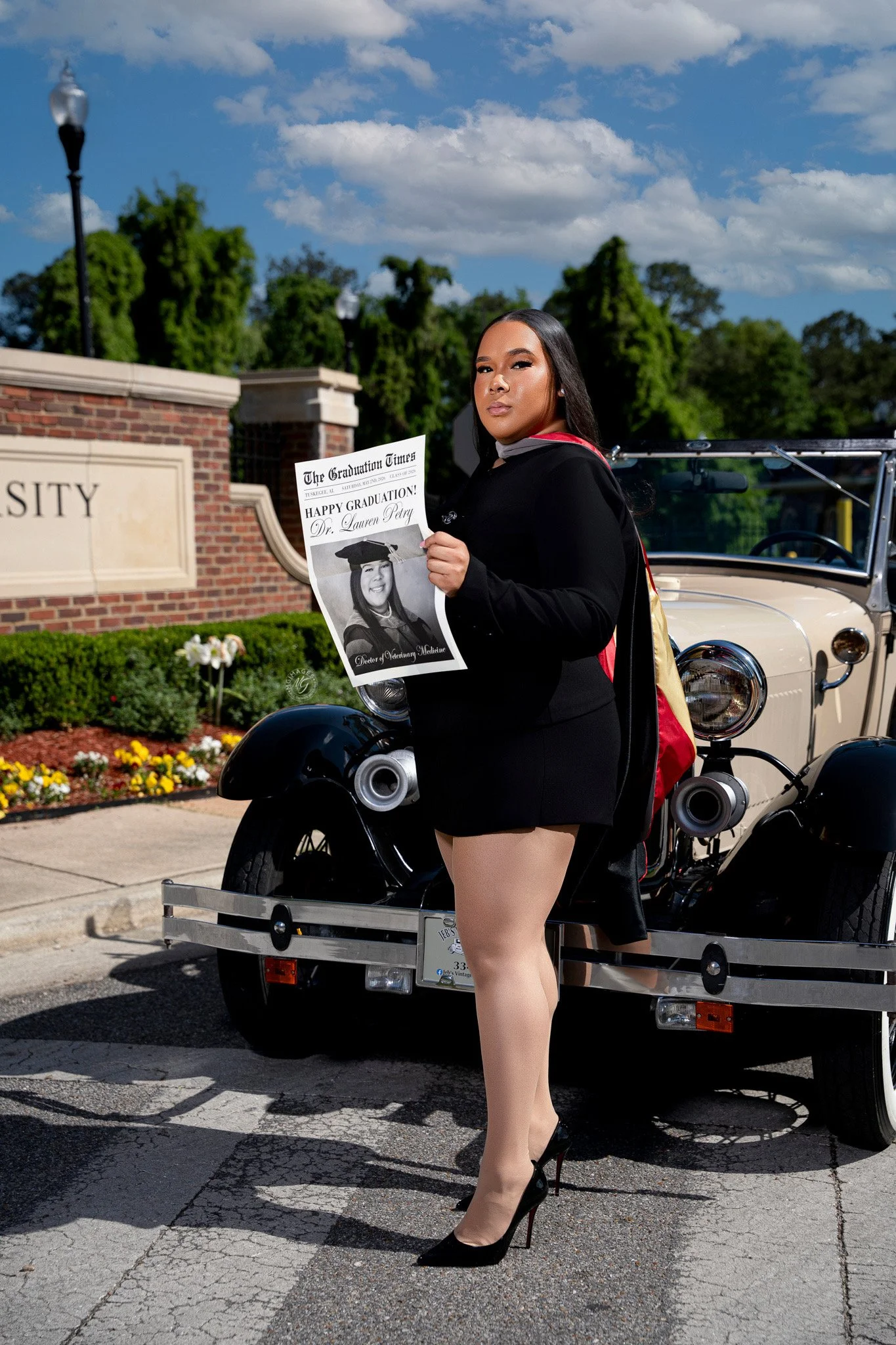
When Lauren started planning her graduation photos, she had a concept in mind that most photographers would not have expected. She wanted a 1929 Model A Shay.
The reasoning was precise and it was beautiful. Tuskegee's campus carries visual and cultural weight that spans generations. The brick, the arches, the architecture that holds the weight of Black excellence, resilience, and progress across more than a century. Lauren wanted her photographs to live inside that timeline rather than just in front of it.
“I specifically chose a 1929 Model A Shay because Tuskegee’s historic campus carries such deep visual and cultural weight,” she says. “Tuskegee is tied to Black excellence, resilience, and progress across generations, and that history gives the environment a built-in sense of legacy and time. I wanted my photos to reflect the same continuum, and to feel like I belonged within that timeline of progress and history.”
She did not get to drive it. But the photos came together exactly as she had envisioned, and the people around her understood immediately what she was reaching for. Some graduation photos are documentation. Hers are a statement.
The Person She Admires Most
When you ask Lauren who she admires, she does not pause.
Her little sister Bailey was diagnosed with a brain tumor before she was six months old. She survived multiple surgeries. She experienced a stroke during one of them. And then she kept going.
Lauren has watched Bailey learn to walk, learn to talk, make honor roll continuously, graduate high school, and start college, all while working toward driving independently. Every milestone other people take for granted has been, for Bailey, a deliberate act of will.
“Once she sets her mind to something, nothing stands in her way,” Lauren says. “She may not even realize it, but she has taught me so much about patience, perseverance, and optimism. She often says she looks up to me, but I look up to her just as much.”
There is something quietly profound about a veterinary student, someone who has navigated the relentless demands of one of the most competitive professional programs in the country, pointing to her younger sister as her greatest teacher. It reframes what strength looks like. It is not the absence of difficulty. It is choosing to move through it anyway.
“She has taught me so much about patience, perseverance, and optimism. She often says she looks up to me, but I look up to her just as much.”
Learning to Carry It Differently
The first patient loss hits differently than you think it will. Most veterinary students are warned. Almost none of them are fully prepared.
Lauren was not. She carried it more heavily than she expected, the way you do when something moves from theoretical to real and you realize the gap between the two was larger than you thought.
The advice she received in that moment has stayed with her. Stop blaming yourself when everything that could have been done has already been done. Find ways to create peace outside of work, because you have to be at your full self to come back the next day and keep caring.
“That advice didn’t take the pain away,” she says, “but it helped me learn how to carry it differently. I will always have compassion for my patients, but I learned to have compassion for myself.”
Compassion for yourself. It sounds simple. For veterinary professionals, in a culture that valorizes stoicism and measures dedication by how much you are willing to sacrifice, it is one of the hardest things to actually practice. Lauren has been practicing it.
Cajun Recipes and Korean Dishes
If she were not a veterinarian, Lauren says she would own a restaurant.
Her cooking is a study in her own biography. She makes Cajun cuisine the way it is supposed to be made, with the layering and the patience that her Louisiana roots require. She also makes Korean dishes she learned from her Halmoni, her grandmother. Two very different traditions, two very different flavor vocabularies, held together by someone who grew up moving between worlds and learned to carry both.
“Being able to bring those flavors together, create meaningful experiences through food, and connect with others is something that truly warms my heart,” she says.
Food and medicine share something essential: they are both fundamentally about care. About showing up for someone with your full attention, your knowledge, and your intention. Lauren does not seem to make the distinction explicitly, but it is there in how she talks about both.
The Advice She Would Give Her Younger Self
It is okay to not be perfect.
Lauren says this with the weight of someone who spent years believing the opposite. That she had to have everything figured out. That she had to carry it alone. That needing help was a kind of failure.
“Growth doesn’t come from perfection,” she says. “It comes from learning, making mistakes, and giving myself grace. The people who care about you want to support you, and allowing them to do so makes the journey a little lighter.”
The word she comes back to is patience. Patience with the process. Patience with yourself. Everything will come together in time, even when it does not feel like it.
That is not a platitude when it comes from someone who has watched her sister learn to walk twice. It is something Lauren has earned the right to say.
“Growth doesn’t come from perfection. It comes from learning, making mistakes, and giving myself grace.”
How She Comes Back to Herself
After a hard day, Lauren has a ritual. She takes her dog for a long walk near a lake. She comes home, takes a warm shower, makes a meal. Then she settles in with a book and lo-fi music until the noise of the day has faded enough that she can sleep.
It is not complicated. It is deliberate. There is a difference.
The structure of it matters. Not a vague plan to relax, but a specific sequence that her body and mind have learned to associate with coming back to baseline. For a profession where the emotional weight is real and the risk of burnout is well documented, having a reliable way to come home to yourself is not a luxury. It is maintenance.
What Comes Next
Lauren Petry is about to graduate. She is stepping into a profession she has been working toward with intention and honesty, carrying the lessons of a sister who taught her that nothing is too hard to push through, a first patient loss that taught her to have compassion for herself, and a set of graduation photos that say, quietly and clearly: I know who I am, I know where I come from, and I know that I belong here.
Small animal medicine, exotics, surgery, dentistry. She has not narrowed it down yet, and she does not need to. She has time. She has the training. She has the kind of foundation that makes the next steps possible.
And somewhere in Louisiana, there is a kitchen that is going to be very grateful she chose veterinary medicine over the restaurant.
Rising Stars • Tuskegee University • HBCU • Veterinary Students • Black Excellence in Veterinary Medicine • Student Wellbeing
