Hackathon Winners Combat Ear Infections, Parasites and Animal Overpopulation
Innovation, entrepreneurship, and veterinary medicine came together at the Animal Health Hackathon hosted by the Cornell University College of Veterinary Medicine, where student teams competed to develop real-world solutions for challenges in animal health. The event drew 116 students across multiple disciplines, including participants from the Tuskegee University College of Veterinary Medicine, highlighting the growing importance of collaborative, cross-institutional training in veterinary innovation and business thinking.
The hackathon awarded three top teams for solutions addressing common but costly animal health problems. The most financially promising concept came from Otitis Fightus, whose product aims to quickly identify the specific bacteria or yeast causing canine ear infections without traditional cytology or culture testing. Ear infections are one of the most common reasons dogs visit the veterinarian, making faster diagnostics highly valuable for both clinicians and clients. Another winning team, Big Red Dawgs, developed an injectable, low-cost sterilization approach designed to help address animal overpopulation challenges globally. The third winning team focused on bovine reproductive health, creating a rapid diagnostic concept for tritrichomonas, a parasite that can cause infertility and pregnancy loss in cattle.
Most financial and market potential: Otitis Fightus, whose product OtiVance is a method to help identify specific strains of bacteria or yeast causing ear infections, without an ear cytology or lab culture. Team members were: Krista Greening DVM ‘29, Madilyn Schindler DVM ‘29, Margo Ganton DVM ‘29, Siraj Gandhi ’28 (CALS) and Tanisha John MEng/MBA ’26.
“Ear infections are the third most common reason why dogs come to the vet,” Gandhi said. “We really valued team culture and had a lot of respect on our team and a lot of trust in each other,” Ganton said, with John adding that she contributed her expertise on financials and business to the team “and I’d never heard of cytology before this weekend, but now it’s something I can never forget.”
Most novel and innovative animal health solution: Big Red Dawgs, an injectable quick and low-cost pet sterilization method. Team members were: Aryan Agarwal ’26 (CALS), Athena Huo MEng ‘26, Sofia Mykytenko ’28 (CALS) and Vianna Bassani DVM ’27.
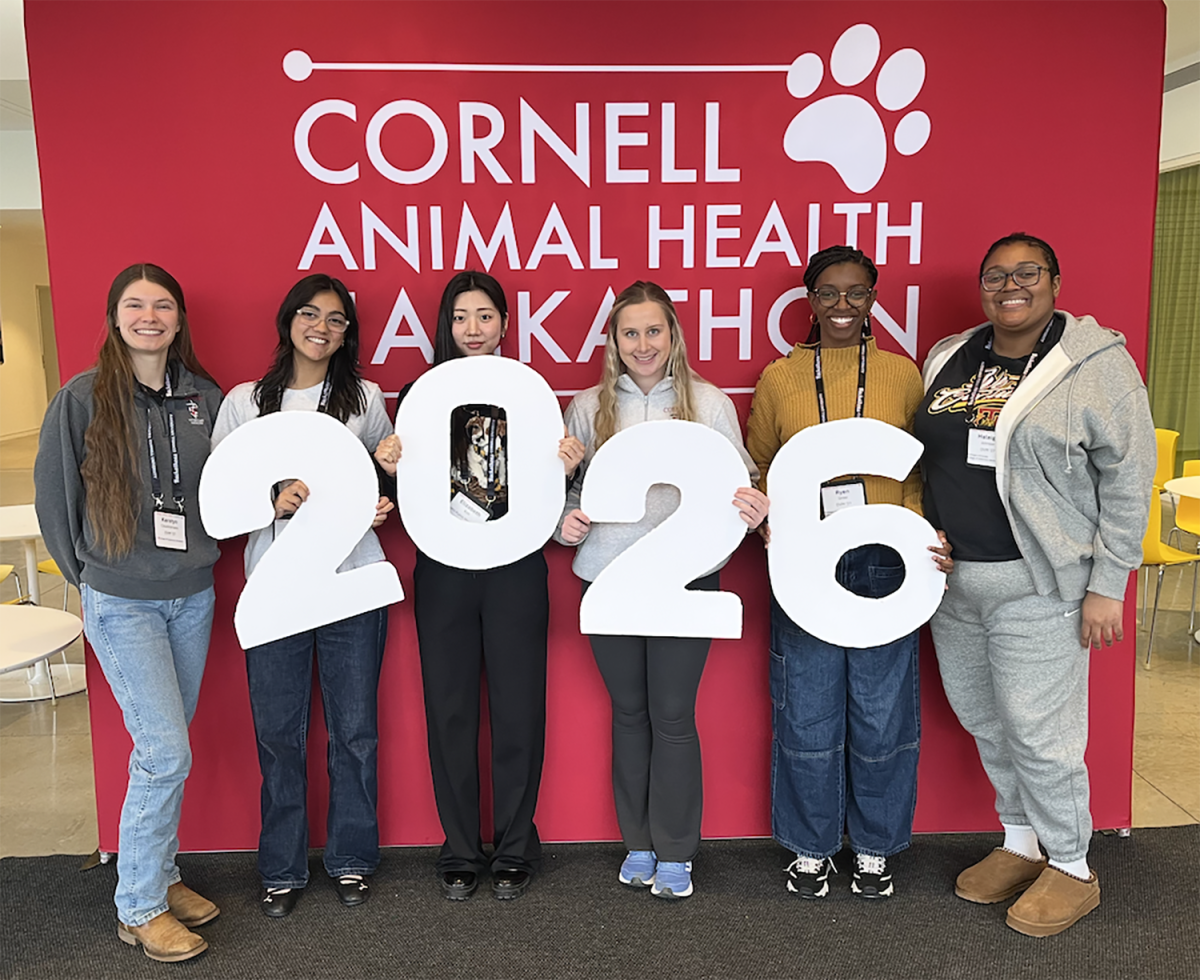
Most impactful and relevant animal health solution:The FantasTRICH Six, whose product is a quick vet-administered diagnostic test for bovine tritrichomonas, a parasite that can cause abortions, infertility and significantly reduced pregnancy rates. Team members were: Elizabeth Kim MPH ‘27, Kerstyn Countrymann DVM ’27, Maggie Kowalewski DVM ’28, Sofia Kulasooriya ’26 (HOTEL), Ryen Greer DVM ‘27 and Haleigh Johnson DVM ’27.
Mentors from industry and academia, including representatives from Boehringer Ingelheim Animal Health, emphasized that innovation in veterinary medicine is about more than technology. It is also about efficiency, accessibility, and improving workflow in everyday practice. Many mentors noted that modern veterinary medicine is increasingly shaped by artificial intelligence tools, rapid diagnostics, and new business models that help practices deliver faster, higher-quality care.
Beyond the business ideas themselves, organizers said the hackathon experience helped students build confidence, leadership, and collaboration skills. Participants described the event as transformative because it allowed them to apply scientific knowledge, financial planning, and creative problem solving to real clinical challenges. Leaders hope events like this will continue to inspire the next generation of veterinarians to think not only as clinicians, but also as innovators and entrepreneurs shaping the future of animal health.