

Miracle Puppy Regrows Jaw After Cancer Surgery: A Veterinary First
In a groundbreaking medical event at Cornell University College of Veterinary Medicine, Tyson, a three-month-old French bulldog puppy, stunned the veterinary world by spontaneously regrowing his jaw after a significant part of it was removed due to cancer. This extraordinary case, the first of its kind in canine medical history, offers new hope in veterinary oncology.
Tyson’s journey began with a visit to the Cornell University Hospital for Animals’ Dentistry and Oral Surgery Service for a routine cleft palate surgery. However, a cancerous tumor was discovered on his jaw during a preliminary examination by his primary veterinarian. The diagnosis was oral papillary squamous cell carcinoma – a malignant and aggressive form of cancer in dogs. Dr. Alexandra Wright, a dentistry and oral surgery resident at Cornell, led Tyson's care team through this challenging time.
The decision to remove a major portion of Tyson’s lower left mandible was critical but necessary to save his life. This type of surgery typically results in the animal living without a fully functioning lower jaw. Yet, Tyson’s story took an unexpected turn. Post-surgery, his jaw began to regrow, an occurrence previously documented in children but never before seen in dogs.
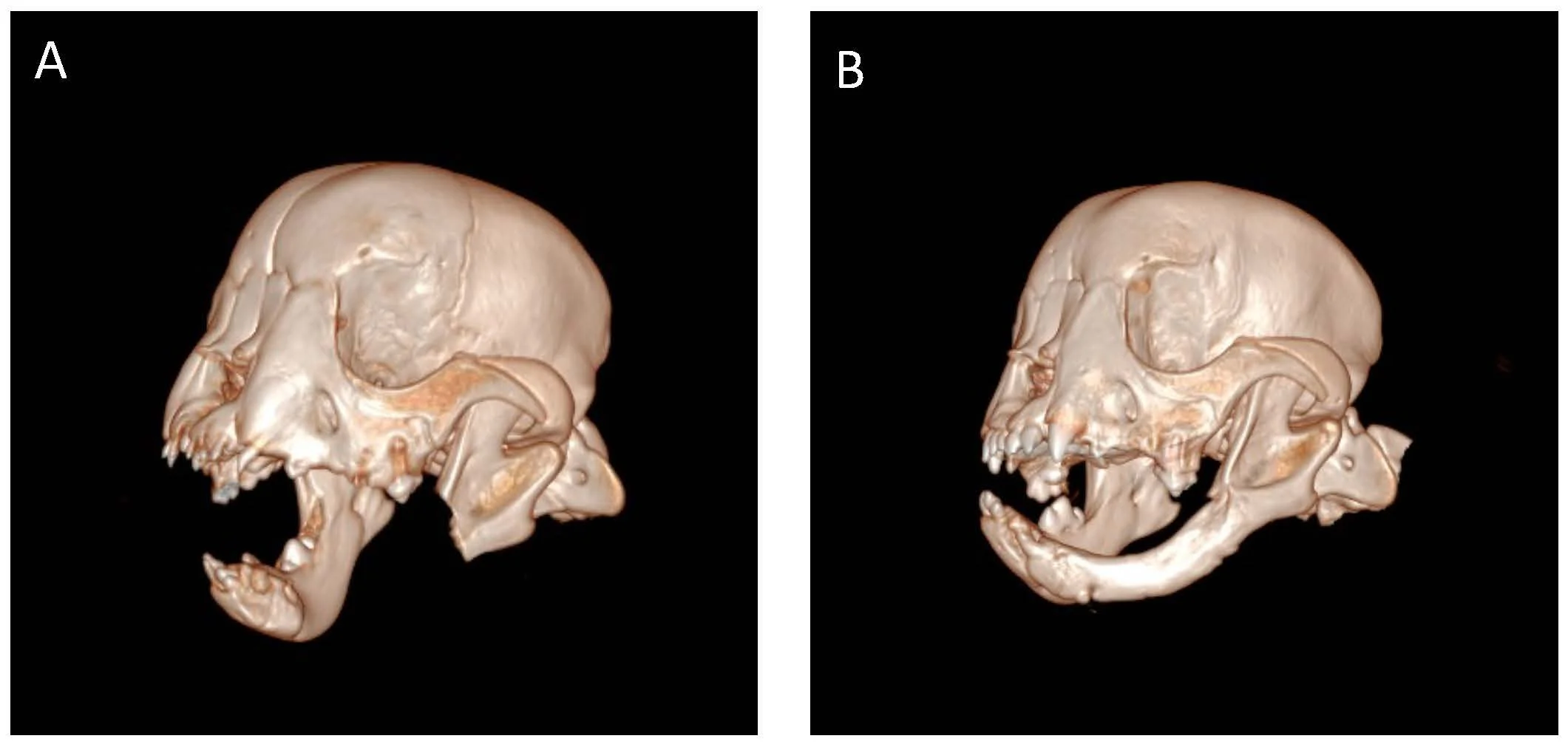
These 3D scans of Tyson show his removed jaw immediately after surgery (left) and eight weeks afterwards (right) with the mandible regrown. Images provided.
Dr. Wright, along with her co-authors Dr. Nadine Fiani and Dr. Santiago Peralta, detailed Tyson's remarkable case in a report published in Frontiers in Veterinary Science. They hypothesized that the preservation of a significant amount of periosteum, a thin membrane covering the bone surface, during surgery was crucial for the regeneration of new bone in Tyson’s case.
Tyson's recovery defied all odds. While there have been anecdotal instances of partial mandible regeneration in young dogs, Tyson’s case was unique due to the extensive amount of bone removed. The early detection of the tumor also played a key role, though the exact mechanisms behind his jaw’s regrowth remain largely a mystery.
This incredible case not only signifies a life-saving outcome for Tyson but also opens up new possibilities in veterinary medicine. It underscores the potential for complete bone regeneration, especially in younger patients. Tyson’s owners, Melissa Forsythe and Mike Lacagnina, were initially unaware of the possibility of jaw regrowth and are now hopeful that Tyson's case will pave the way for new treatment avenues for other dogs facing similar diagnoses.
Dr. Wright emphasizes the need for further research to understand the likelihood of such occurrences in other dogs and whether age plays a significant role. Nonetheless, Tyson's miraculous recovery stands as a beacon of hope and a testament to the advancements in veterinary medicine.
The full version of this astonishing story, written by Melanie Greaver Cordova, can be found on the Cornell University College of Veterinary Medicine website, offering an in-depth look into Tyson's medical journey and its implications for future veterinary practices.
